For social landlords – cold walls create condensation, and condensation creates complaints. Heat Halo is a targeted thermal treatment designed to increase internal wall surface temperatures on condensation-prone walls in occupied homes.
Installed by trained Heat Halo installation teams in three days, with minimal disruption to residents.
Target the worst-performing walls first · Minimal resident disruption · Occupied-home installation · Evidence before wider deployment
The Problem
When internal wall surfaces drop below dew point, condensation forms. Mould follows. Cleaning, ventilation improvements and resident engagement programmes provide temporary relief – but if the wall surface temperature doesn't improve, the problem returns.
This is increasingly a compliance issue. Awaab's Law is changing the regulatory expectation on social housing providers to demonstrate effective intervention – not just reactive response.
The same walls. The same properties. The same residents. Mould returns because the underlying cold wall problem hasn't been addressed.
Regulatory expectations are tightening. Social housing providers need to show they are responding to damp and mould with effective, evidenced interventions – not just remediation.
Cold walls, condensation and mould generate formal complaints, disrepair claims and reputational exposure that consume disproportionate resource across the sector.
Cold, damp rooms directly affect resident health and comfort. Warmer wall surfaces improve habitability – and resident satisfaction – in the properties that need it most.
The Intervention
A single, well-defined scope. Transparent, fixed prices from first pilot to portfolio rollout.
Pilot price
per wall up to 12m², ex VAT – 5‑wall Cold Wall Pilot
Installation only: no remedial work, wall preparation, skim or decoration included. Property remains occupied. Your existing contractors prepare the wall beforehand and complete finishing works afterwards.
| Stage | Per wall | Total |
|---|---|---|
| Cold Wall Pilot – 5 walls | £2,995 | £14,975 |
| Expanded pilot – 15 walls | £3,195 | £47,925 |
| Programme – 50 walls | £3,195 | £159,750 |
| Portfolio rollout – 200+ walls | £3,195 | from £639,000 |
All prices are per wall up to 12m², exclude VAT and are fixed for two years from contract, then reviewed.
An independently evidenced thermal intervention on a condensation-prone wall, installed without disrupting the resident, in a defined time frame, with full QA documentation – and finishing works retained within your existing contractor relationships.
A major capital programme. A whole-house retrofit project. A works package that requires residents to move out, rescheduling contractors, or committing to large-scale spend before you have evidence that the intervention works in your stock.
Insulating the walls of five homes the conventional way costs about £51,000 with internal wall insulation, or £116,500 with external wall insulation, at average delivered costs under the Social Housing Decarbonisation Fund.
A 5-wall Cold Wall Pilot gives you performance evidence, resident feedback and QA documentation for £14,975.
Sources: DESNZ, SHDF Wave 2.1 Process Evaluation, August 2025 (internal, £10,200 each); Inside Housing, 17 September 2025 (external, £23,300 each).
Typical Applications
These are often the locations where mould repeatedly returns despite cleaning, decoration, ventilation improvements and resident engagement programmes.
Exposed gable walls with high condensation risk and limited capacity for external intervention.
Often the coldest surfaces in the property, particularly at first-floor and above.
Two exposed external walls create persistent cold spots and elevated damp risk, especially in solid-wall construction.
Cold bridging through roof junctions and parapet walls creates recurring mould at high-level wall surfaces.
Pre-1920 and inter-war stock with no cavity – solid walls conduct cold directly to the internal surface without an insulation break.
Properties where multiple rounds of remediation have not resolved the underlying condensation problem.
Why Start with Individual Walls?
Housing associations, local authorities and ALMOs can pilot the intervention on the walls that matter most – without committing to a full retrofit programme before the evidence exists to support it.
Identify the condensation-prone walls generating the most complaints and intervene there – before deciding on wider deployment.
Three-day programme in an occupied home. Residents do not need to move out or vacate rooms for extended periods.
Heat Halo installs the thermal treatment only. Your existing contractors handle any remedial work and wall preparation beforehand, and skim and decoration afterwards – keeping your supply chain relationships intact.
Gather real-world performance data, resident feedback and operational evidence before committing to a larger programme.
QA documentation, thermal performance evidence and resident outcomes provide the evidence base for sign-off on wider deployment.
Demonstrate a structured, evidenced response to persistent damp and mould complaints – rather than repeated reactive remediation.
How It Compares
Every damp and mould response addresses part of the problem. The Cold Wall Pilot is the option that raises cold wall surface temperatures with negligible space loss and minimal disruption.
| Intervention | Typical use | Humidity | Cold surface | Internal space | Disruption |
|---|---|---|---|---|---|
| Mould treatment | Symptom management | No | No | None | Low |
| PIV | Humidity management | Yes | No | None | Low |
| Infrared heating | Localised comfort | No | Temporary | None | Low |
| Internal wall insulation | Significant upgrade | No | Yes | Significant | High |
| External wall insulation | Whole-building upgrade | No | Yes | None | Medium |
| The Cold Wall Pilot | Localised cold wall treatment | No | Yes | Negligible | Low |
The Cold Wall Pilot targets the cold surface directly, with negligible loss of internal space – the practical gap between symptom management and whole-wall insulation.
Independent Performance Evidence
Heat Halo has been independently evaluated under BS ISO 9869-1 using treated and untreated rooms on the same solid-wall property.
Tested at Binfield, Berkshire. Build Test Solutions Ltd, 24th April 2026. Untreated control room on the same wall held steady throughout the 18-day test period.
Year-Round Comfort
The primary benefit is warmer internal wall surfaces that reduce condensation risk through the colder months. Because the same thin thermal layer improves the wall's overall performance, the Cold Wall Pilot is also measuring how a more stable internal surface behaves during summer heat.
Warmer wall surfaces move the internal face further above dew point – directly reducing condensation risk.
A more stable internal surface temperature, buffered from external heat – being measured across the pilot.
Year-round thermal comfort is an active measurement area within the pilot, not a fixed performance claim.
Measured, Not Anecdotal
Every wall is baselined before installation and monitored on a defined schedule, so outcomes are evidenced rather than assumed.
Construction type, orientation, heating and occupancy – plus surface and air temperatures, relative humidity, moisture readings, thermal imaging and resident feedback.
Readings captured at baseline, then 1, 3, 6 and 12 months – tracking surface temperatures, humidity, moisture, thermal imagery, resident feedback and complaint history.
Installation Programme
The Cold Wall Pilot is designed for occupied homes. The programme is structured around minimising disruption while maintaining quality assurance throughout.
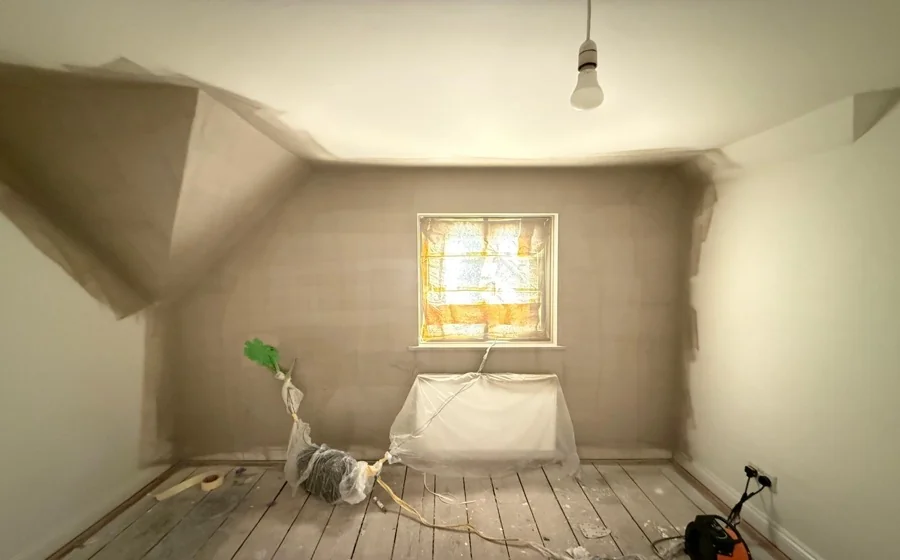
The installation team protects the room and masks surrounding surfaces, on a wall already prepared by your contractors. No structural works required.
Controlled installation of a 2mm Heat Halo thermal treatment directly onto the cold wall surface.
Quality assurance records completed and handed to your organisation. Ready for finishing works by existing contractors.
The Cold Wall Pilot
Heat Halo is designed to be piloted first, allowing social housing providers to validate performance, resident outcomes and operational delivery before committing to wider programmes.
Pilot walls, selected from the worst-performing locations in your stock – typically gable ends, corner rooms, end-terrace properties or persistent mould addresses.
A 5-wall pilot at £14,975 provides performance evidence, QA documentation and resident outcome data – at a fraction of the cost of a traditional pilot programme.
Per wall. Property remains occupied. No need to rehouse residents or coordinate temporary accommodation.
Pathway to Deployment
The Cold Wall Pilot is designed to be staged. Begin with a handful of walls, build the performance and resident-outcome evidence, and scale only when the data supports it – from a first pilot through to portfolio-wide rollout.
walls. First evidence, minimal commitment – £2,995 per wall, £14,975 in total.
walls. Validate across property types and locations – £3,195 per wall, £47,925 in total.
walls. Operational delivery at scale – £3,195 per wall, £159,750 in total.
walls. Embedded in your asset-management strategy – £3,195 per wall, from £639,000.
What the Pilot Proves
Improved comfort, satisfaction and confidence that complaints are being resolved.
Reduced conditions that drive condensation and mould formation.
Consistent, safe delivery in occupied homes with minimal disruption.
Clarity on where targeted intervention sits in the damp, mould and retrofit hierarchy.
A clearer picture of year-round comfort, measured across the seasons.
Evidence for Internal Sign-Off
The Cold Wall Pilot is designed to generate the evidence social housing providers need for internal business case approval, regulatory assurance and wider deployment decisions.
Pre- and post-installation wall surface temperature monitoring confirms the improvement in treated walls. Analysis of the BTS monitoring data by BTS's engineer found the Heat Halo coated surface ran 2–3°C warmer on average than the wall surface beneath the coating.
Full quality assurance records for each treated wall, available for Awaab's Law compliance evidence, internal audit, regulator review and future procurement decisions.
Compliance & Assurance
Heat Halo is specified and delivered as a construction system – not supplied as a decorative coating. Survey, contractor approval, controlled installation and full QA documentation for every wall.
Pilot and programme installations are supported by a 10-year installation-backed system guarantee, subject to specification compliance, approved installation methodology and documented QA sign-off.
Installed by trained two-person Heat Halo installation teams operating to a defined installation standard – not a general contractor applying a retail product.
COSHH, method statements and QA outputs available for pilot review and internal sign-off. Evidence packaged for Awaab's Law compliance and regulatory review.
Heat Halo is designed to sit within a measured, risk-managed retrofit process with Retrofit Coordinator oversight, aligned with PAS 2035 principles – for social housing providers where this is relevant to their wider retrofit strategy.
The Cost of Inaction
Where the underlying cold wall is never addressed, a single complaint becomes repeat inspections, repeat treatments and continued pressure on housing teams.
Repeat inspections, mould treatments, re-decoration and ongoing contractor visits.
Repeat complaints, reduced confidence in repairs and increased scrutiny from residents.
Greater demand on housing officers, repairs teams and case management.
Heightened scrutiny of damp and mould cases and potential escalation under Awaab's Law.
Questions
A targeted thermal treatment installed on cold, condensation-prone walls in occupied social housing. Analysis of the BTS monitoring data by BTS's engineer found the Heat Halo coated surface ran 2–3°C warmer on average than the wall surface beneath the coating. Each intervention covers one wall up to 12m², installed by a trained two-person Heat Halo installation team over three days. The property remains occupied throughout.
The Cold Wall Pilot is £2,995 per wall up to 12m², so a 5-wall pilot is £14,975. Expanded pilots, programmes and portfolio rollouts are £3,195 per wall: 15 walls £47,925, 50 walls £159,750, and 200+ walls from £639,000. All prices exclude VAT and are fixed for two years from contract, then reviewed.
Minimal. The property remains occupied throughout the three-day installation programme. Heat Halo does not require removal of skirtings, window reveal rebuilds, or temporary resident relocation. Heat Halo provides the installation only: your existing contractors complete any remedial work and wall preparation beforehand, and finishing works after installation.
Heat Halo is particularly suited to end-terrace properties, gable walls, corner bedrooms, top-floor rooms, solid-wall construction and locations with persistent condensation complaints or repeat mould problems – often the walls where mould repeatedly returns despite cleaning, ventilation improvements and resident engagement programmes.
Next Step
Tell us about the properties and walls you're dealing with. We'll confirm suitability, outline a programme structure and provide the full technical pack.
The Cold Wall Pilot Pack covers Heat Halo's technical specification, independent test results, a proposed programme structure for your stock, and the QA and evidence outputs that support internal sign-off.
Or email us directly:
pilots@heathalo.uk