Where EWI isn't viable and conventional internal boarding is too disruptive, Heat Halo offers a low-disruption internal insulation route for occupied solid-wall housing stock — independently tested, PAS 2035 aligned, and fully documented.
Evaluate performance, resident impact and delivery before scaling.
Suitable for solid-wall and heritage properties · Minimal need for temporary resident relocation · Aligned with PAS 2035 retrofit principles · Installed by specialist contractors
The Problem
Large volumes of older housing stock continue to underperform — with low EPC ratings, cold internal wall surfaces, condensation risk, fuel poverty, and ongoing repair cycles that are difficult to resolve.
This is the category of stock that will not meet retrofit targets with conventional solutions alone.
Complaints are a regulatory and reputational pressure point post-Awaab Ishaq, with rising complaint workload across the sector.
Solid-wall, heritage and conservation-sensitive buildings often cannot accept conventional external or internal board-based systems.
Traditional internal insulation boards can require temporary resident relocation, joinery changes, window reveal rebuilds, dust, noise and extended time on site.
Past experience with decorative thermal paints has created understandable caution. Heat Halo is different — it's a professionally installed system, not a retail paint.
Why Existing Solutions Fall Short
| Option | Common limitation | Heat Halo position |
|---|---|---|
| External Wall Insulation | Planning restrictions, heritage limitations, high cost and major disruption. | Internal application where EWI is impractical. |
| Board-based IWI | Space loss, temporary relocation, reveal rebuilds and moisture risk if poorly designed. | Millimetres, not centimetres — with a moisture-conscious installation process. |
| Decorative thermal paints | DIY perception and weak procurement confidence. | Professionally installed spray-applied system with skim and decoration finish. |
Independent Performance Evidence
Heat Halo has been independently evaluated under BS EN ISO 9869 using treated and untreated rooms on the same solid-wall property.
Many older solid-wall homes start from a much poorer thermal baseline than the independently tested property. Applying the more conservative BTS measured thermal resistance improvement to a wall starting at 2.0 W/m²K indicates a potential improvement of around 25%.
Tested at Binfield, Berkshire. Build Test Solutions Ltd, 24 April 2026. Untreated control room on the same wall held steady throughout the 18-day test period.
The Pilot Offer
Heat Halo is designed to be piloted first, allowing Housing Associations to validate technical performance, resident outcomes, delivery cost and operational suitability before committing to wider programmes.
Homes, ideally solid-wall 1–3 bedroom flats or houses with EPC D–F profiles.
Typical 2–3 bed solid-wall home. Comparable to full internal replastering — but with added thermal performance and without the temporary relocation and joinery rebuilds required by board-based insulation.
Preparation, professional spray application, plaster skim, decoration and making good.
Installation Methodology
Confirm stock profile, suitability and pilot objectives with your retrofit team.
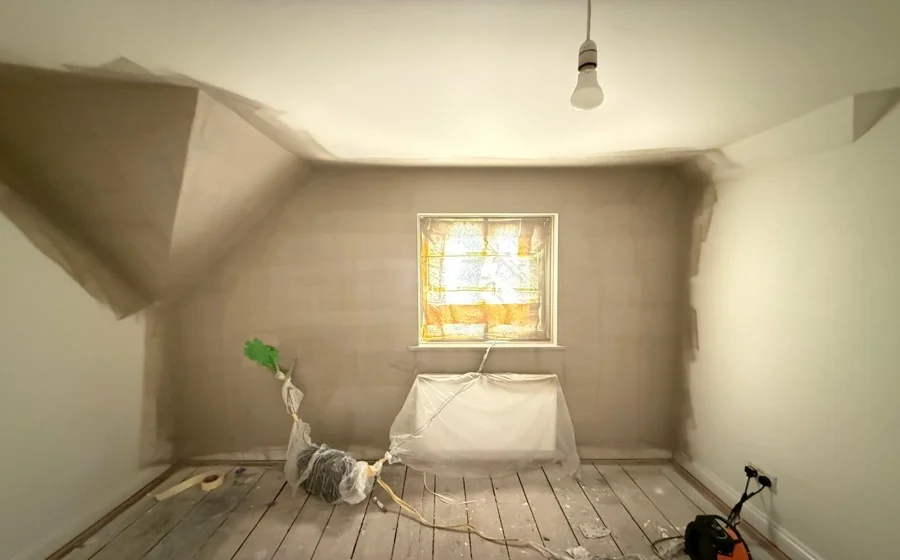
Protect resident areas, mask surfaces, prepare walls for application.
Controlled coating application by specialist contractors using professional equipment.
Plaster skim and white emulsion decoration — standard finished interior.
Monitoring data, QA records and pilot findings packaged for internal sign-off.
Why it matters for procurement
Heat Halo is specified and delivered like a construction product: survey, contractor approval, controlled application and full QA documentation for every property. This is what allows it to be procured with confidence and audited when required.
Pilot and full-programme installations are supported by a 10-year system guarantee, subject to specification compliance, approved installation methodology, and documented QA sign-off.
Heat Halo is specified and installed as a controlled retrofit system, not supplied as a decorative coating or retail thermal paint. Full comparison is covered on the About page.
Performance Monitoring
Each pilot is designed to create measurable operational evidence for internal business case approval, regulator review, future funding applications and procurement decisions.
Pre- and post-installation wall surface temperature and relative humidity tracking across treated and control rooms. The independent BTS test recorded an average 2–3°C increase in internal wall surface temperature over the 18-day post-installation period — directly relevant to condensation and damp risk.
Resident comfort and disruption feedback, alongside energy usage trends where metered data is available.
Compliance & Assurance
Heat Halo is aligned with the practical needs of Housing Associations evaluating hard-to-treat stock, resident disruption and moisture-conscious retrofit strategy.
Supports improvement of building fabric performance where traditional approaches are impractical.
Designed to sit within a measured, risk-managed retrofit process with Retrofit Coordinator oversight.
COSHH, method statements, and QA outputs available for pilot review and internal sign-off. Installations are supported by a 10-year system guarantee, subject to specification compliance and approved methodology.
Independent UK testing and certification pathways are being developed for wider procurement confidence.
Next Step
Tell us about your stock and we'll confirm pilot suitability, outline a delivery structure and provide the full technical pack.
The Pilot Pack covers Heat Halo's technical specification, independent test results, installation methodology, cost framework and a proposed pilot structure for your stock profile.
Or email us directly:
pilots@heathalo.uk